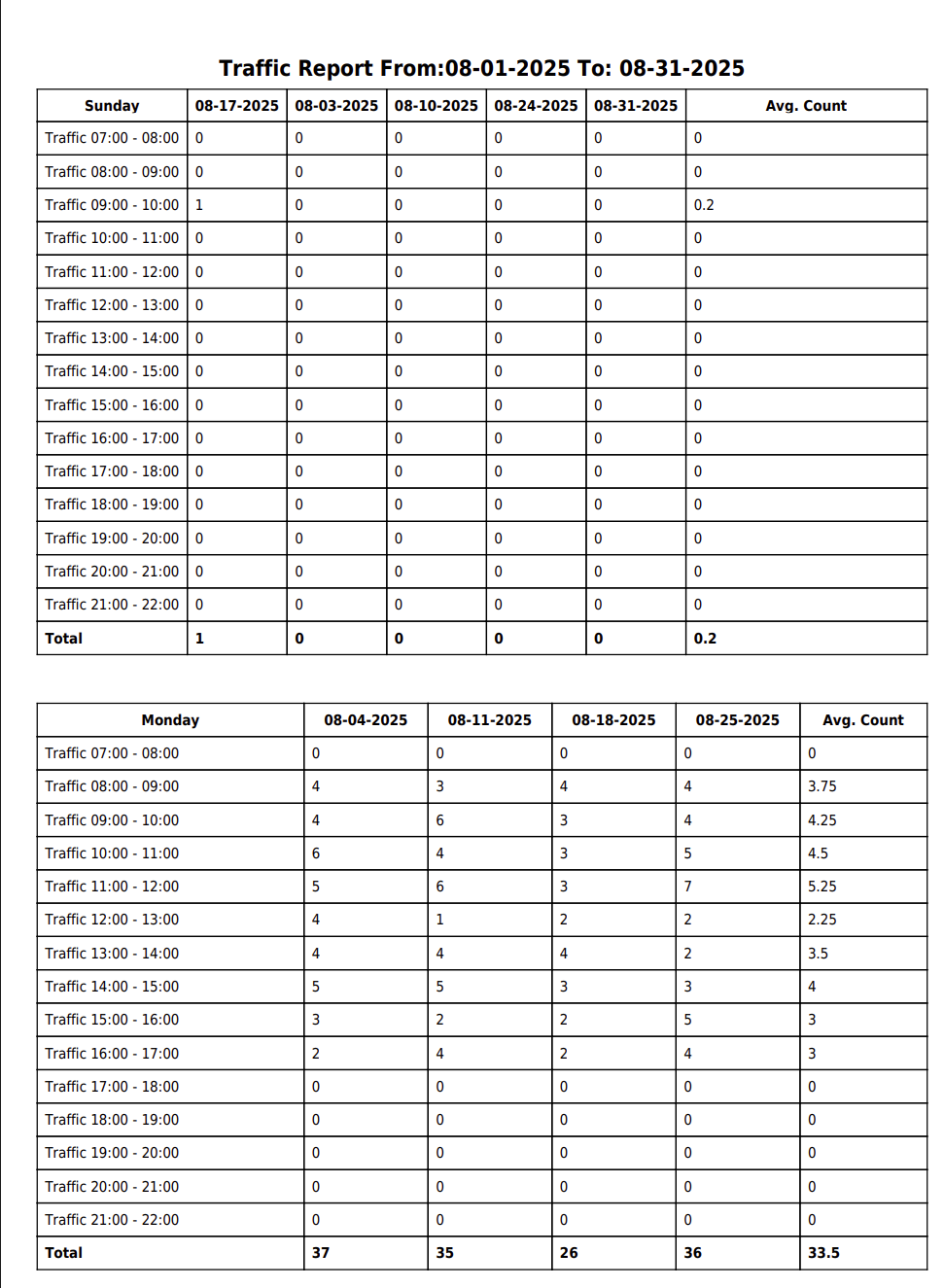
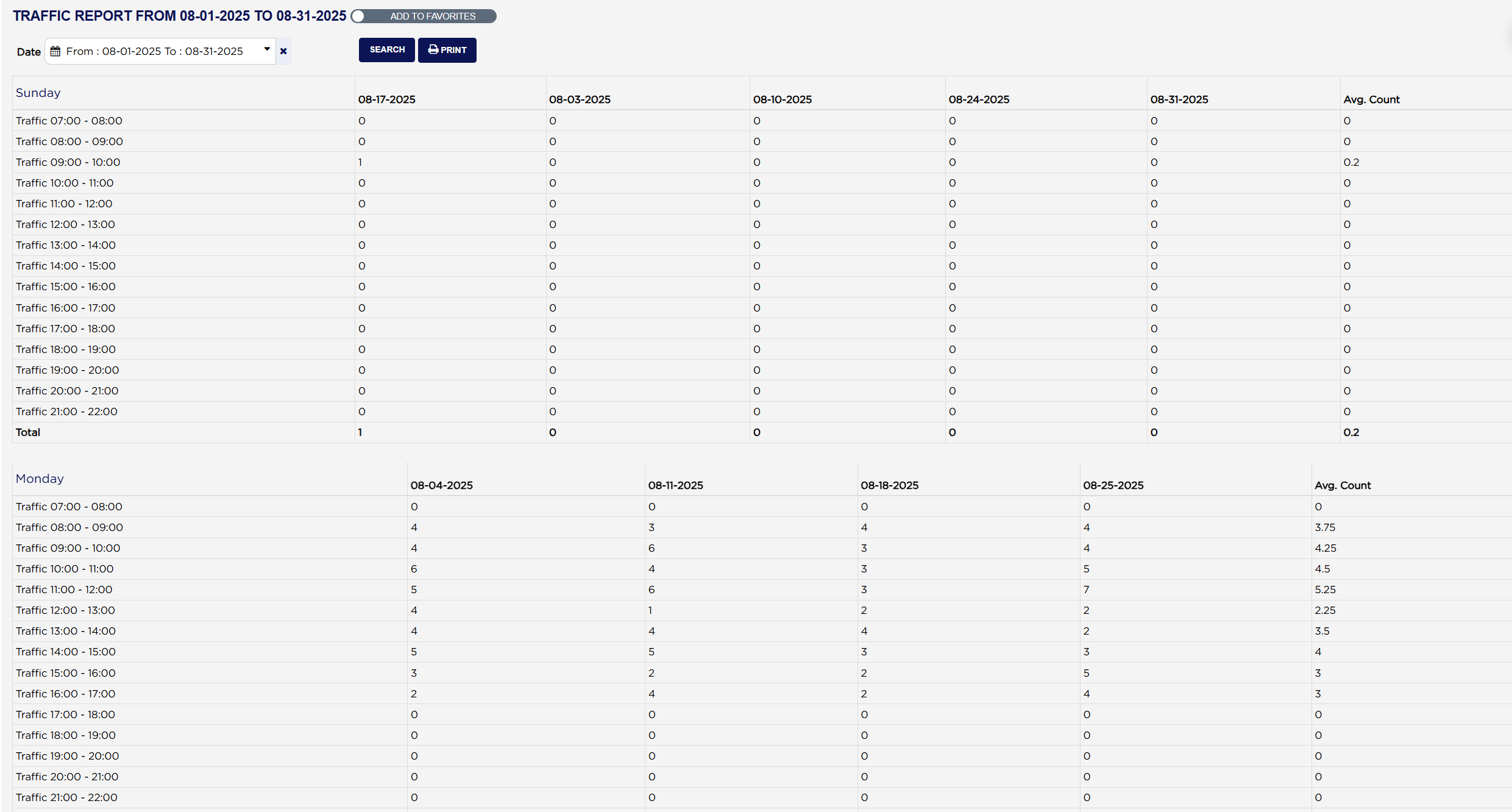
Pick the range with the tables in mind. Every occurrence of a weekday in the range becomes a column, so a month gives four or five columns per table and a quarter gives thirteen. A month is comfortable; a fortnight is tighter still if you want a close look.
What counts as traffic: an invoice is counted at the hour its record was created — the moment the job was written up at the counter. That is not the same basis as the other reports in this section, which use the date an invoice was finalized, so the figures here will not reconcile against a sales report. Everything written up counts, including work that was never finalized.
The report gives each day of the week its own table, in order from Sunday to Saturday. The weekday name sits in the top-left corner, the dates run across the top, and Avg. Count closes the row. Down the side are fifteen hourly bands, from Traffic 07:00 - 08:00 to Traffic 21:00 - 22:00, and a Total row at the foot.
Each cell is the number of invoices written up in that hour on that date. Avg. Count is the row added up and divided by the number of dates in it. The Total row adds each date's whole day, and its Avg. Count is the average of those daily totals.
A day you are closed still gets a table, filled with zeros across every hour — Sunday in the example shows a single invoice all month, which is what a closed day looks like here rather than a missing table. Where a weekday does not occur in the range at all, the table is replaced by the line *No ‹weekday› data in selected range.*
Two things to keep in mind when reading it. The hourly bands are fixed at 07:00 to 22:00 whatever your opening hours, and an invoice written up outside those hours is not counted in any row or in the Total — so if you open early or close late, check the day's totals here against your own count before relying on them. And the date columns are not always in date order: a date that had traffic can appear ahead of earlier ones, as the 17th does under Sunday in the example, so read the date in each column heading rather than assuming left-to-right is oldest-to-newest.